Begin by noticing, not testing
When adults ask repeated questions, a child can feel under pressure to perform. Try observing what they already do to request, refuse, seek help, share enjoyment or ask for a break. Treat those actions as meaningful communication and respond consistently.
Pause for longer
After speaking or showing a choice, wait quietly. Some children need extra processing time before they can respond.
Use fewer words
Say the key message first: “Shoes on”, “Drink or snack?” or “First toilet, then garden”. Add explanation only when it helps.
Show as well as tell
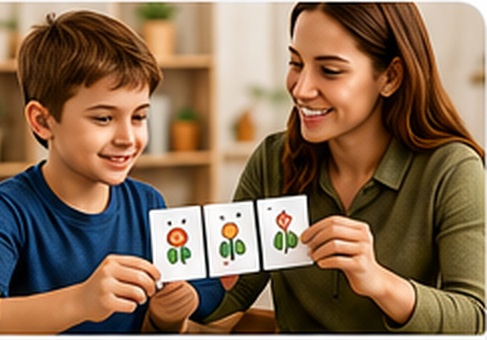
Pair words with a gesture, photograph, symbol, written word or the real object. Visual information remains available after speech has disappeared.
Try this at home today
Create two genuine choices
Offer two options you can accept, such as apple or banana, bath now or in five minutes, music or quiet. Show each option and accept pointing, looking, reaching, signing, speaking or using AAC as a valid response.
Build communication into routines
Pause before a familiar part of a song, keep a favourite item visible but not immediately available, or wait beside the closed door before going outside. These natural pauses create a reason to communicate without turning the moment into a test.
When communication becomes difficult
Distress, silence, echolalia, repeated phrases or behaviour may increase when a child is overwhelmed, in pain, unsure what is happening or unable to express a need. Reduce demands, make the environment calmer, offer a break and return to the conversation later. Regulation comes before teaching.
Working with nursery or school
Ask staff which communication methods are understood and available throughout the day—not only during specialist sessions. A useful shared plan should explain how your child says yes, no, stop, help, finished, more, pain and break. It should also record how adults will respond.
Where AAC is used, it should travel with the child and be available across lessons, play, meals and community activities. Adults should model it without demanding imitation.