
What sensory processing means
Learn how the brain receives, organises and responds to sensory information—and how small changes can make everyday life feel safer and easier.
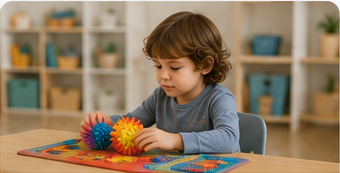
Your child’s brain is constantly sorting information
Sensory input
The brain notices and organises it
The body responds
Sensory needs can influence much more than behaviour
This illustrative chart is not a diagnosis or population statistic. It shows how a large share of one difficult moment may be connected to sensory load, with the rest linked to factors such as communication, tiredness, pain, uncertainty or demands.
The important question becomes: “What might the child be experiencing?” rather than “Why are they behaving like this?”
Flip each shape to reveal a sensory system
Slide from a busy environment to a calmer version


Move the slider and notice how reducing visual load, uncertainty and competing demands may help a child process what is happening.
What would you try first?

Jay enters a busy supermarket. The lights are bright, several announcements play, and people keep passing close by. Jay covers his ears and drops to the floor.
Build a calmer plan
Tap helpful strategies to move them into the plan.
Your calmer plan
Which statement best reflects sensory-aware support?
What might help your child this week?
Notice
Write down what happens before, during and after a difficult moment.
Try one change
Reduce one sensory demand rather than changing everything at once.
Review gently
Look for signs of comfort, participation and recovery—not perfect compliance.
Great work—you completed the prototype lesson
You explored sensory processing through narration, diagrams, an infographic, flip activities, an image slider, scenarios, sorting and a knowledge check.